Most business owners picture hackers as faceless criminals hiding behind keyboards.
But what if the biggest threat to your company could walk through the front door, smile at your receptionist, and sound exactly like your CEO on the phone?
That’s not a movie plot. It’s happening right now.
A professional penetration tester with 17 years of experience recently shared how modern social engineering attacks are evolving, and the lesson for small businesses is uncomfortable but critical: AI has made human trust the weakest link in security.
When Hacking Doesn’t Look Like Hacking
Security expert Rob Shapland is paid to break into companies legally, to show them where their defenses fail. And surprisingly, the failures rarely involve complicated software exploits.
Sometimes all it takes is:
- A clipboard and confident body language
- A cup of coffee and the right excuse
- Or a phone call that *sounds* like it came from the top
In one real-world test, Shapland gained access to a company’s CEO email account without touching a keyboard.
How?
The AI Trick That Fooled a Service Desk
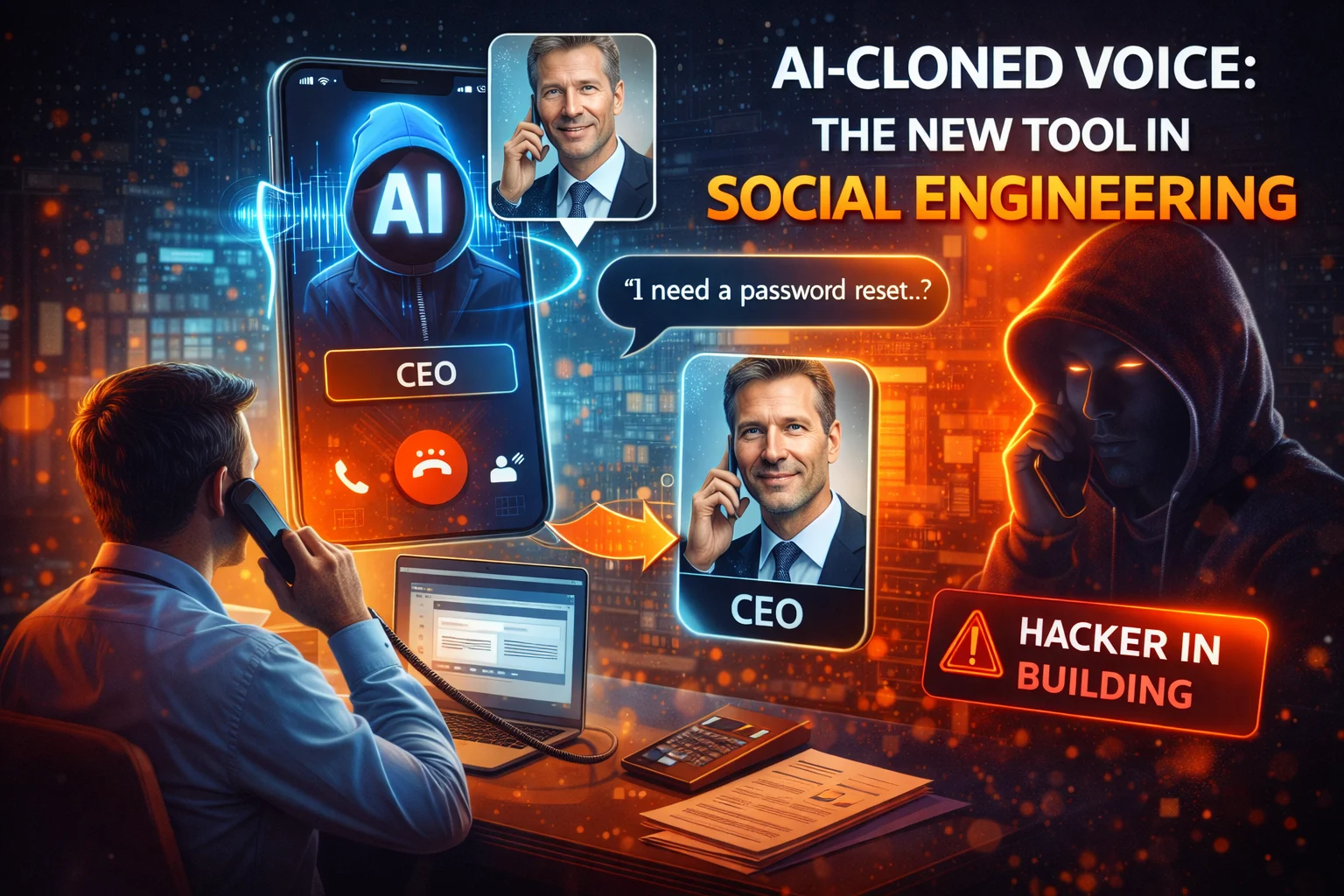
Shapland found a short promotional video of the CEO on YouTube. Just a few minutes of audio was enough.
Using a legitimate voice AI tool, he cloned the CEO’s voice and called the company’s IT service desk.
The message was simple:
“I need a password reset.”
The voice matched.
The tone matched.
The urgency felt real.
The service desk reset the password.
No malware.
No hacking tools.
Just AI + trust.
Why This Matters for Small Businesses
Large corporations may make headlines, but small and mid-sized businesses are often easier targets:
- Employees wear multiple hats and trust each other
- IT processes are informal or undocumented
- Service desks and vendors may not verify requests thoroughly
- Executives’ voices and faces are publicly available online
AI makes impersonation faster, cheaper, and far more convincing than ever before. Criminals no longer need deep technical skills, they just need access to your people.
This Isn’t Just Digital Anymore
Modern attacks blend:
- AI-generated voices and messages
- Physical presence in offices
- Fake uniforms, badges, or delivery stories
- Real information pulled from social media
An attacker might:
- Call pretending to be leadership
- Walk into an office posing as a contractor
- Email employees using personal details they found online
And once one person trusts them, everything unravels quickly.
Why “Annual Training” Isn’t Enough
Shapland makes one thing very clear:
Boring security training doesn’t work.
Quick quizzes and checkbox compliance don’t prepare employees for real-world pressure. People remember mistakes when they *see* them happen, especially when they realize they were the one who opened the door.
Effective security training has to be:
- Memorable
- Practical
- Ongoing
- Human-focused
Because attackers aren’t just targeting systems anymore, they’re targeting behavior.
If you'd rather have someone handle this for you, talk to us.