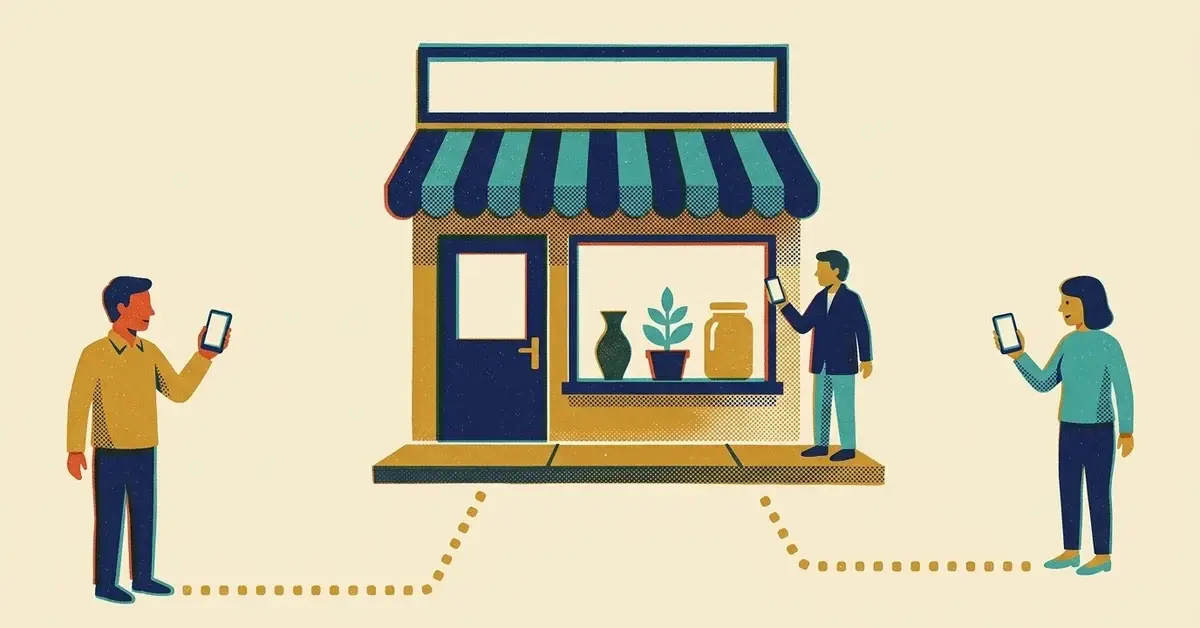
"Influencer marketing" sounds like something for brands with big budgets and a creator with a million followers.
For a local business, that's the wrong picture.
The person who can actually send you customers might have 600 followers. Most of them live within 20 minutes of you. Some of them are your future clients.
That's a nano-influencer. And yes, they can drive leads, if you pick the right person, keep it honest and track it.
The quick answer
- Pick for fit, not follower count. Local audience, real comments, someone who'd genuinely use you.
- Start with people who already like you: happy customers, referral partners, local professionals.
- Give talking points, not a script.
- Make the relationship obvious. If they got paid, a discount or a free service, the post says so.
- Track every creator separately with their own link or code.
- Run it as a four-week test, then keep, change or stop.
What counts as a nano-influencer
There's no official cutoff. Marketers usually mean someone with a few hundred to roughly 10,000 followers.
The number matters less than who those followers are.
A local gym member with 800 followers, most of them neighbors, can do more for a gym than a creator with 50,000 followers three states away. Trust is local. So is your service area.
Is this a fit for your business?
It works best when there's a human story to tell. Good fits:
- Gyms, studios and wellness businesses
- Salons and barbers
- Restaurants and cafes
- Home services (cleaners, landscapers, contractors)
- Realtors and insurance agents
- Photographers and event businesses
- Local professional services with strong client relationships
If people already ask friends "who do you use for that?", a nano-influencer is just a louder version of that conversation.
Where to find them
You probably know a few already.
1. Happy customers
The best source by far. If a customer loves you and already posts, ask:
"Would you be open to sharing your experience in a short post or video? No script, just your honest take."
2. Referral partners
People who already serve your customers before or after you do. A realtor for a home inspector. A bookkeeper for a business coach. An insurance agent for a contractor.
They have audience overlap, and they have a reason to keep the relationship good.
3. Local community voices
Look at local Facebook groups and neighborhood pages. Who answers questions? Who gets asked for recommendations?
Don't pitch inside the group. Use it to learn who people trust, then reach out directly.
4. Your own team
Sometimes the best small creator is already on payroll. A team member who's comfortable on camera can post behind-the-scenes clips, quick tips or "what a visit looks like."
Same disclosure rule applies: if they're posting about their employer, followers should know.
What to offer
You don't always need cash. Common options:
- A small flat fee per post
- A referral bonus for each booked customer
- A free service, class or consultation
- A discount for them and their followers
- A gift card
- A joint offer with a partner business
Whatever it is, it counts as a "material connection" under the FTC's endorsement rules. The FTC's guide Disclosures 101 for Social Media Influencers says that includes a brand paying you or giving you free or discounted products, and that the disclosure has to be hard to miss: in the post or video itself, not buried in a bio or a pile of hashtags.
Simple wording works: "Paid partnership with [business]" or "[Business] gave me a free session to try." Put it in your talking points so nobody has to guess.
One more line not to cross. The FTC's rule on fake reviews and testimonials, in effect since October 21, 2024, bans fake testimonials. It also bans buying fake followers or views for a business purpose when you knew or should have known they were fake. If the person hasn't used your service, don't frame their post as a customer experience.
And keep this separate from Google reviews. Offering perks in exchange for reviews (payment, discounts, free goods or services) breaks Google's rules, and Google removes those reviews. More on that: how to ask for Google reviews without breaking Google's rules.
What the post should look like
The posts that work sound like the creator, not a flyer. Five formats to suggest:
- Experience: "I went to [business] because I needed [problem]. Here's what surprised me..."
- Before and after: "Before, I was dealing with [problem]. Now, [result]."
- Process: "Here's what the visit / consultation / install actually looked like."
- Tip: "Something I learned from [business]: [useful tip]."
- Recommendation: "If you're dealing with [problem] around [town], they're worth a call."
Short video usually beats a static photo for this. If filming feels awkward, these three easy short-video formats work for creators too.
How to track it
This is where most small businesses lose the plot. They do the collaboration, see some likes, and have no idea whether it brought in a single customer.
Use at least two of these:
A UTM link per creator. A UTM is a tag on the end of a link that tells Google Analytics where the visit came from. Example:
?utm_source=instagram&utm_medium=creator&utm_campaign=spring_offer&utm_content=jane
The full system for naming these so they stay clean: the UTM system that makes marketing make sense.
A promo code per creator. Easy to say out loud in a video. JANE10 beats a long link.
"How did you hear about us?" on your form and at intake, with an option for "a friend or local creator" and a box for the name.
A simple landing page if the campaign matters. A page that speaks to that creator's audience converts better than your homepage.
What to measure
Likes are nice. They aren't leads.
Set up a simple sheet with one row per creator and these columns:
- Creator
- Offer
- Link clicks
- Code uses
- Calls or form fills
- Booked customers
- Cost (cash plus the value of anything free)
- Cost per booked customer
A post with 300 views that books two good customers beats one with 10,000 views that books none.
A four-week test plan
Week 1: Pick three people. Local audience, real engagement, good reputation, fits your customer.
Week 2: Set the offer. One thing only: a discount, a free consultation, a class, an event sign-up.
Week 3: Brief them. Send what you do, who it helps, the problem it solves, the disclosure wording, and their link or code. Then let them make it their own.
Week 4: Review. Clicks, codes, calls, bookings, cost. Keep the ones that worked, change the offer for the ones that almost did, and stop the rest.
Mistakes to avoid
- Writing their script. Forced posts sound fake, and their followers can tell.
- Hiding the relationship. It's a trust problem and an FTC problem.
- Chasing follower count. 700 local followers beat 20,000 random ones.
- Expecting one post to do it. This works as a repeatable habit, not a one-off.
- Skipping the tracking. If you can't tell which creator sent which customer, you can't do it again on purpose.
If you'd rather have someone set up the tracking for you, we can help.


No comments yet