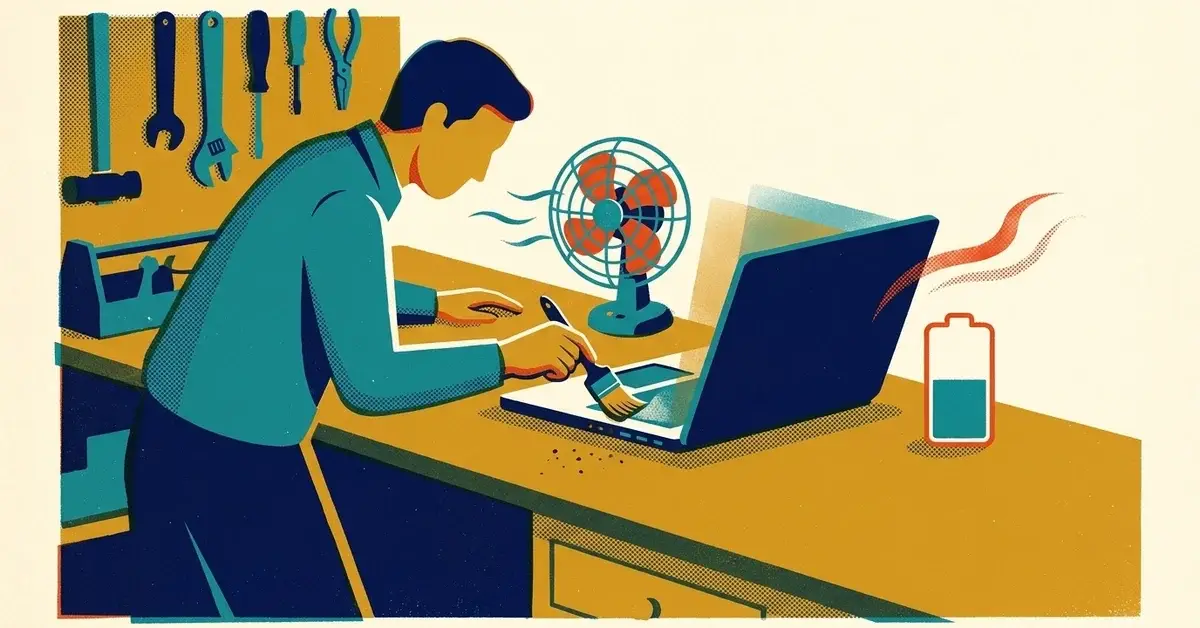
The laptop was fine when you bought it. Two years later the battery barely lasts the morning, the fan kicks in when you open a spreadsheet, and the bottom gets hot enough that you've stopped using it on your lap.
Most of that is wear you can slow down. Not stop, but slow down a lot. Here's what actually makes a difference, starting with the things that take five minutes.
The quick answer: 7 tips
- Keep it cool. Hard, flat surface. Never a bed, couch or carpet.
- Clean the vents a couple of times a year, powered off, with short bursts of compressed air.
- Turn on the charge limit if it lives on the charger. It's in the manufacturer's app or the BIOS, not in Windows.
- Install updates, including the manufacturer's driver and BIOS updates.
- Use the right power setting so it isn't running flat out for email.
- Upgrade storage or memory before you replace it, if the model allows it.
- Carry and store it properly. Padded bag, never a hot car.
The rest of this post is the how, Windows 11 first.
First, check what's actually wearing out
Two minutes now tells you which tips matter most for your machine.
Battery health (Windows 11)
- Right-click Start and choose Terminal.
- Type
powercfg /batteryreportand press Enter. - Open the
battery-report.htmlfile it names. - Compare Full Charge Capacity with Design Capacity.
The first is what the battery holds now. The second is what it held new. Microsoft's battery health report for business devices treats a battery below 60% of its design capacity as most impacted and 60-80% as moderately impacted.
Heat and noise
If the fan runs hard on light work (email, a browser, one spreadsheet) or the laptop slows down after a few minutes of use, it's probably running hot. Dust and blocked vents are the usual cause.
Windows version
Go to Settings > System > About and look under Windows specifications. If it says Windows 10, read tip 4 before anything else.
The 7 tips, step by step
1. Keep it cool
Heat is the thing that ages a laptop fastest: the battery, the fan, everything.
- Use it on a desk or table. Soft surfaces block the vents underneath.
- Don't leave it running in a closed bag.
- A laptop stand or a cooling pad helps if you're on it all day.
Apple's handling guide for Mac laptops gives an operating range of 50° to 95°F (10° to 35°C). Most Windows laptops list something similar on their spec sheet. A sunny desk by the window in July is outside it.
2. Clean the vents and keyboard safely
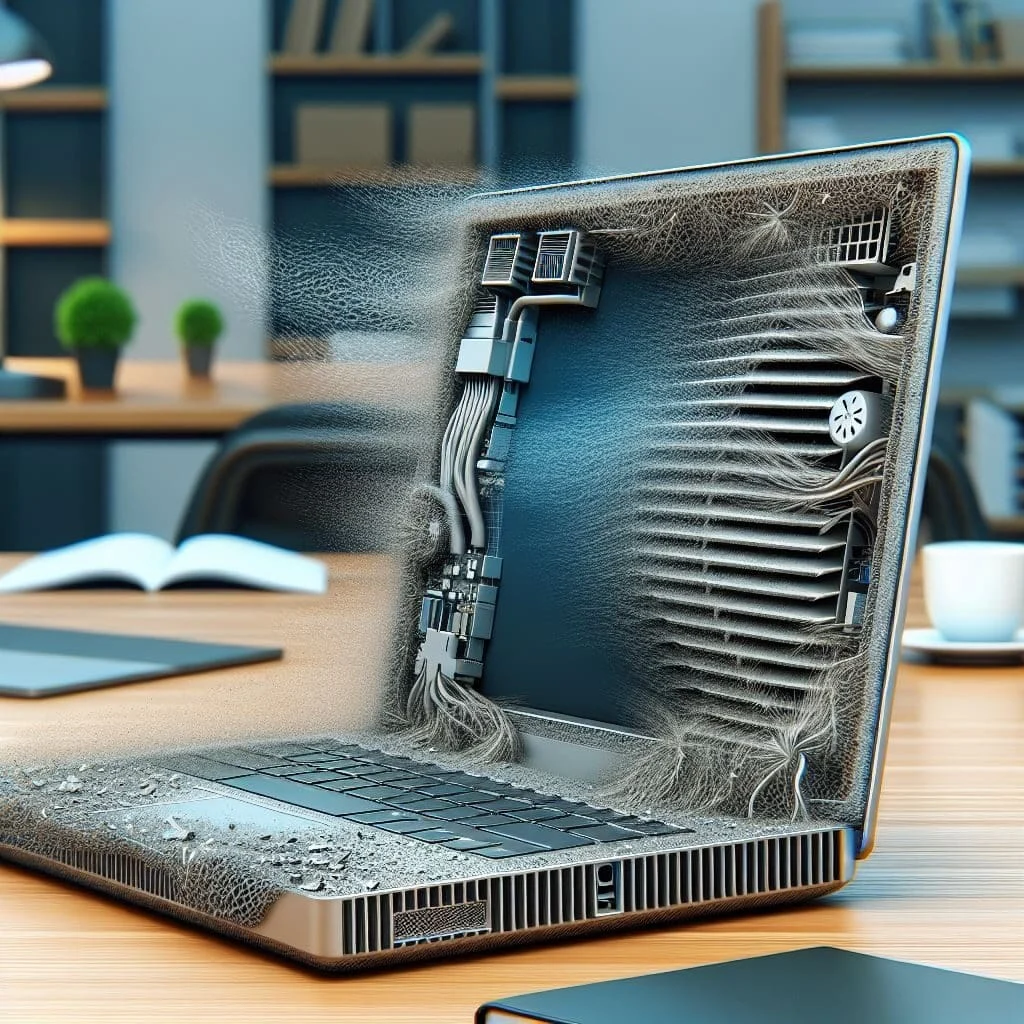
Dust in the vents makes the fan work harder and the laptop run hotter.
- Shut it down (not sleep) and unplug it.
- Use short bursts of compressed air through the vents. Hold the can upright. HP's own laptop cleaning guide recommends short bursts.
- Don't use a vacuum on the vents, and don't open the case unless the manual says you can. Opening some models can affect the warranty.
- For the screen and keyboard, use a soft microfiber cloth. Never spray liquid straight onto the laptop.
Can you use alcohol? It depends on the manufacturer. Apple's cleaning guide allows a cloth moistened with 70% isopropyl alcohol on Mac laptop displays and enclosures. Other makers differ, especially on matte or coated screens, so check your model's manual first.
If the fan still roars after cleaning, the dust is inside, and that's a job for a technician.
3. Turn on the charge limit (if it lives on the charger)
Modern laptops stop charging when they're full, so you can't "overcharge" one. What wears a lithium-ion battery is sitting at 100% for long stretches, especially when warm. Apple's battery charging article says a battery's chemical age depends on its temperature history and charging pattern, not just how old it is.
That's why most manufacturers include a setting that stops charging below 100%. Windows 11 doesn't have one of its own. It's in the laptop maker's app or the BIOS, and the name changes by brand.
Laptop | Where to find it | What it's called |
|---|---|---|
Microsoft Surface | Surface app > Battery & charging, or Surface UEFI | Smart charging; Battery Limit |
Lenovo | Lenovo Vantage > Device > Power (menu names vary by version) | Conservation Mode (IdeaPad); battery charge threshold (ThinkPad) |
Dell | Dell Power Manager or Dell Optimizer | Primarily AC Use, Adaptive or Custom |
HP | BIOS (press F10 at startup) or HP's power app on some models | Battery Health Manager or Battery Care Function |
Mac | System Settings > Battery | Optimized Battery Charging; Charge Limit on newer macOS |
A few details worth knowing:
- Microsoft's Surface Battery Limit stops charging at 50%. Microsoft recommends it for devices that are always plugged in, such as a point-of-sale laptop or kiosk.
- Lenovo's charging support article says a laptop that won't charge past about 55-60% probably has Conservation Mode or a charge threshold turned on. This is the most common "my battery is broken" call that isn't a broken battery.
- Dell describes Primarily AC Use in its battery performance article as a setting for people who mostly run on wall power. It keeps the battery from charging all the way.
If you travel, you can switch the limit off the night before a trip and back on when you return.
4. Install updates, all of them
Updates fix security holes and bugs, and the manufacturer's updates often include fixes for battery, fan and charging behavior.
- Windows: Settings > Windows Update > Check for updates. Restart when it asks, instead of postponing it for weeks.
- Drivers and BIOS: use the maker's app (Surface app, Lenovo Vantage, Dell SupportAssist or Dell Command Update, HP Support Assistant). Windows Update doesn't always get these.
- Antivirus: Windows 11 includes Microsoft Defender Antivirus. Check it's on in Settings > Privacy & security > Windows Security > Virus & threat protection.
Still on Windows 10? Microsoft ended support on October 14, 2025. No more free security updates. A business can buy Extended Security Updates for a limited time, but the real fix is upgrading to Windows 11 if the hardware qualifies, or replacing the laptop if it doesn't. A Windows 10 laptop with a healthy battery is still a security problem. Here's what changed for business Windows 10 PCs and how to check each one.
5. Use the right power setting
On Windows 11, go to Settings > System > Power & battery.
- Power mode: "Best power efficiency" or "Balanced" for everyday office work. "Best performance" runs hotter.
- Energy saver: Microsoft's Energy Saver documentation says it replaced battery saver in Windows 11 version 24H2. It lowers screen brightness, limits background apps and pauses non-critical update downloads. You can set it to come on automatically at a battery percentage you choose.
- Battery usage on the same page shows which apps drain the most. Sometimes the problem is one app, not the battery.
6. Upgrade before you replace
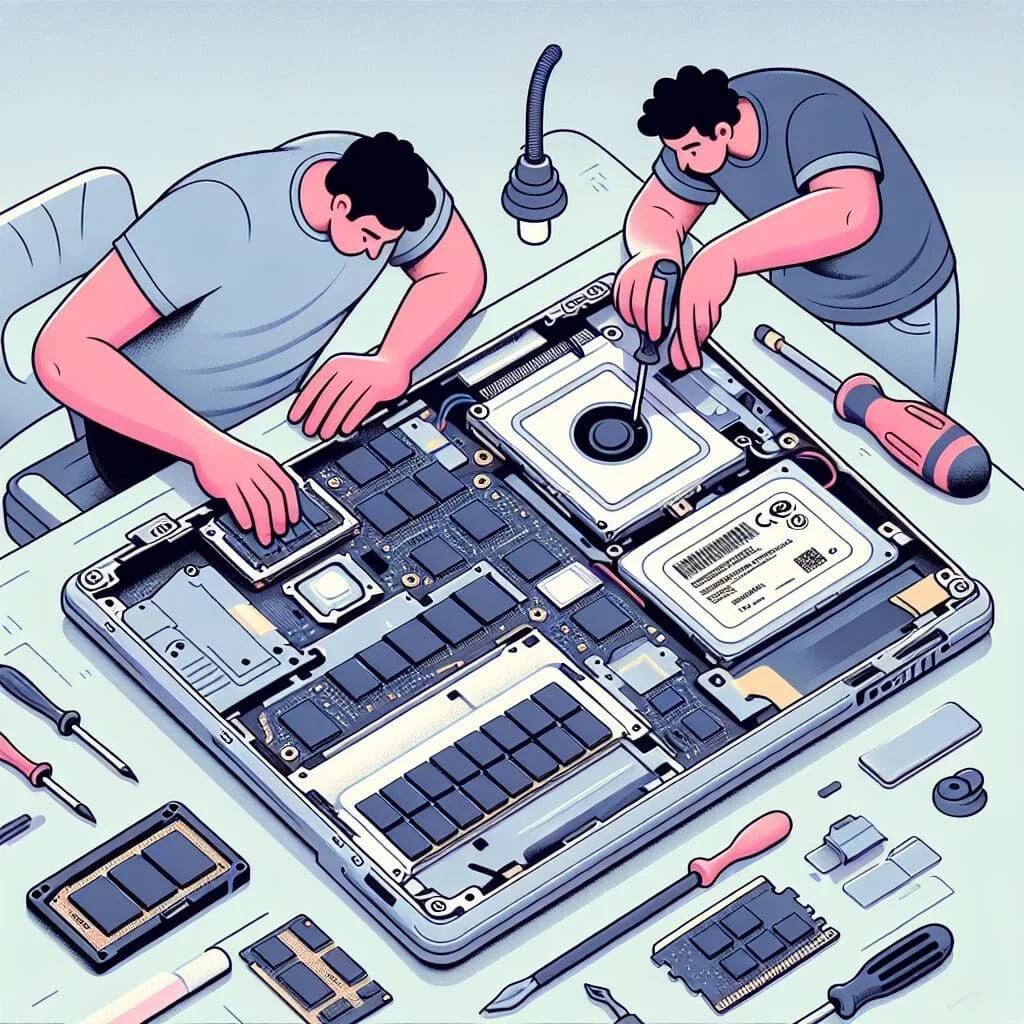
If the laptop is slow but otherwise healthy, an upgrade can cost far less than a new one. Rule out the free fixes first with our guide to a slow Windows computer.
- Storage: if it still has a spinning hard drive, moving to an SSD is usually the biggest speed improvement you can buy.
- Memory: if it struggles with Microsoft 365, a browser full of tabs and a video call at the same time, more memory can help.
- Check first. Many thin laptops have memory soldered to the board, and some have no spare drive slot. Look up the exact model on the maker's spec sheet or service manual before you buy parts.
- Battery: a worn battery can often be replaced on its own. Get a quote before you give up on the whole laptop.
7. Carry and store it properly
- Use a padded laptop bag or sleeve. A tote or a plastic bag isn't protection.
- Don't leave it in a car. Apple's handling guide lists a storage range of -13° to 113°F (-25° to 45°C), and a closed car in summer gets hotter than that.
- If it's going in a drawer for months, Apple's guidance for Mac laptops is to store it about half charged in a cool place, and top it back up to 50% every six months if storage runs longer than five months.
- Close the lid gently, and never with a pen or earbuds on the keyboard. That's how screens crack.
Why laptops wear out
Three things, mostly:
- Battery chemistry. Every lithium-ion battery loses capacity over time. Heat and long stretches at full charge speed that up.
- Heat and dust. A clogged fan runs hotter and louder, and the processor slows itself down to stay safe. That's the "it got slow" feeling.
- Software. Each year's apps ask more of the same hardware, and an unpatched system collects problems.
You can slow down the first two a lot, and the updates in tip 4 take care of the third.
If it's already going wrong
- Case bulging, trackpad lifting, keyboard rising? That's likely a swollen battery. Shut it down, unplug it and stop using it. Don't charge it again.
- Shuts itself down when it's busy, or the fan never stops? The cooling needs a technician.
- Won't charge, cracked screen, dead keys? Our guide to common laptop problems that need repair walks through each one and how to check your warranty.
- Touchpad dead or pointer jumping? Check the settings first with our mouse and touchpad fixes.
Whatever the symptom, back up first. If it still turns on, make sure your files are in OneDrive, Google Drive or your company backup before anyone opens it.
Keeping a business's laptops healthy
For a team, this is about setting things up once so nobody has to remember:
- Set the charge limit on every laptop that sits on a dock all day. It's the cheapest battery insurance you'll find.
- Let updates install on a schedule. Microsoft Intune can manage Windows Update for every device, and its battery health report flags worn batteries across the fleet.
- Keep a simple list: who has which laptop, the serial number, purchase date, warranty end date and Windows version. That turns replacement into a plan instead of an emergency.
- One-line staff rule: "Hard surface, padded bag, never in the car, restart when Windows asks."
When to get help
Call someone when:
- The battery report shows under 60% of design capacity and you're not sure whether to replace the battery or the laptop.
- It overheats or shuts down even after cleaning the vents.
- You have Windows 10 machines that can't upgrade to Windows 11, or you're not sure which ones can.
If you'd like a hand working out which laptops to fix and which to replace, get in touch.



No comments yet